- University
- NCAD, Dublin
- Year
- 2026
- Team
- 2 people
- Duration
- 4 weeks
NOX
A ritual for quieter nights.
The ritual, filmed end to end
[ In one line ]
A physical artefact that allows you to externalise an anxious thought, enact a deliberate gesture, and experience closure through a symbolic act of destruction.
Framing
What if anxious thoughts didn't need to be managed, analysed, or reframed, but simply released?
NOX began as an exploration into how anxiety manifests in moments of stillness, particularly at night. While anxiety is often discussed in relation to productivity, social pressure, or digital overload, we were interested in a quieter but persistent experience: the inability to sleep due to looping thoughts.
Rather than attempting to solve anxiety, the project focuses on a moment of change: the transition from internal rumination to rest.
The problem
The transition from mental noise to sleep.
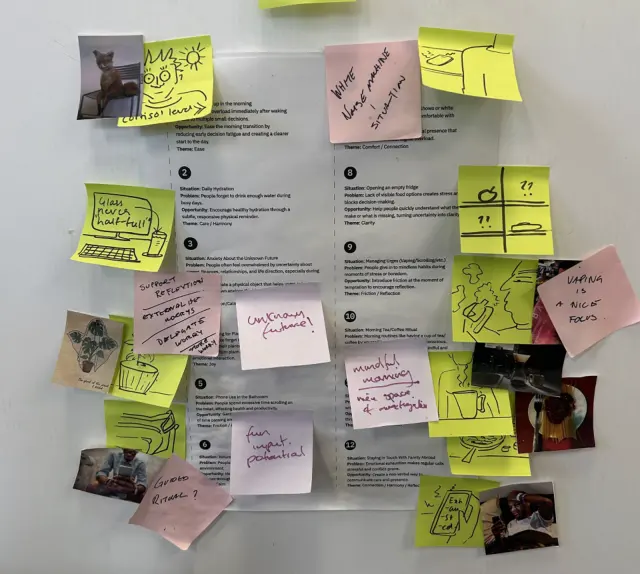
Early research surfaced a recurring pattern: anxiety peaks at night, thoughts loop without resolution, and distraction replaces processing. We focused on this specific, fragile, often invisible moment.
The problem wasn't anxiety itself, but the gap between thinking and doing something with those thoughts. They stay internal, with no physical exit. We needed to design a way out.
The metaphor
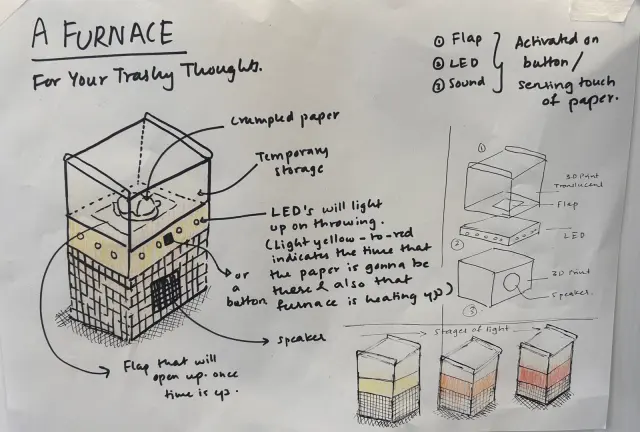
From object to ritual. The furnace.
The shift was from designing an object to designing a ritual, supporting the full emotional journey (overwhelm, recognition, externalisation, action, closure), not just the final gesture. This led us to fire as metaphor: ancient, intentional, irreversible, transformative rather than erasing.
A bin disposes. A furnace transforms.The shift the project turns on
Storyboard
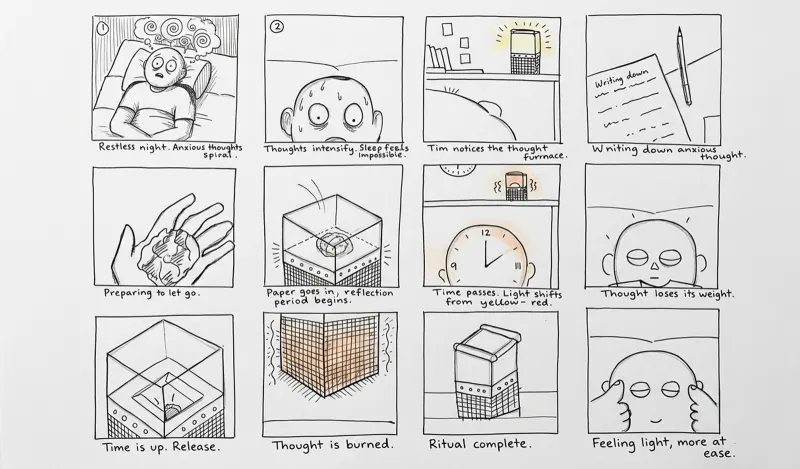
Emotional mapping
Designing the arc, not the shape.
Once the furnace metaphor was established, our focus shifted from form-making to designing the emotional arc of the interaction.
Each phase shaped how the object should behave, not just how it should look. Its responses needed to feel legible emotionally, even without understanding the technology behind them.
Prototyping
Research through making.
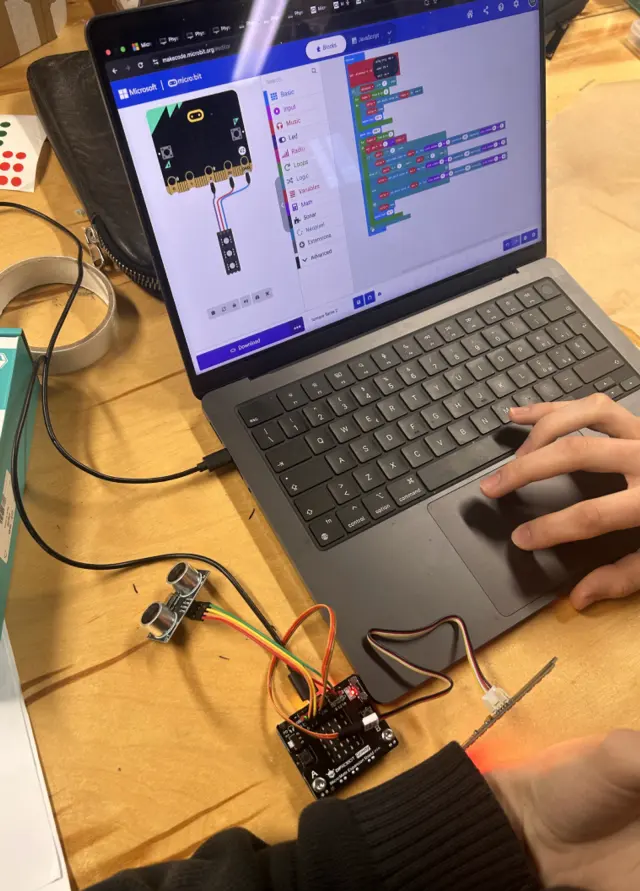
Understanding emerged through making, not upfront specification. Physical computing was foundational: NOX couldn't exist without sensing, timing, and programmed behaviour. We treated code, via micro:bit, as a material: tested, broken, refined.
What we explored
- 01Sensor thresholds
- 02Conditional triggers
- 03Light and sound timing
- 04Handling unreliable input
- What does release feel like physically?
- How fast is too fast for ignition?
- When does sound turn theatrical instead of grounding?
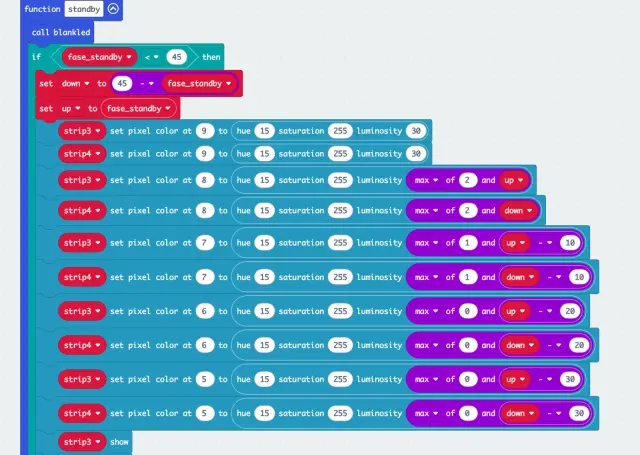
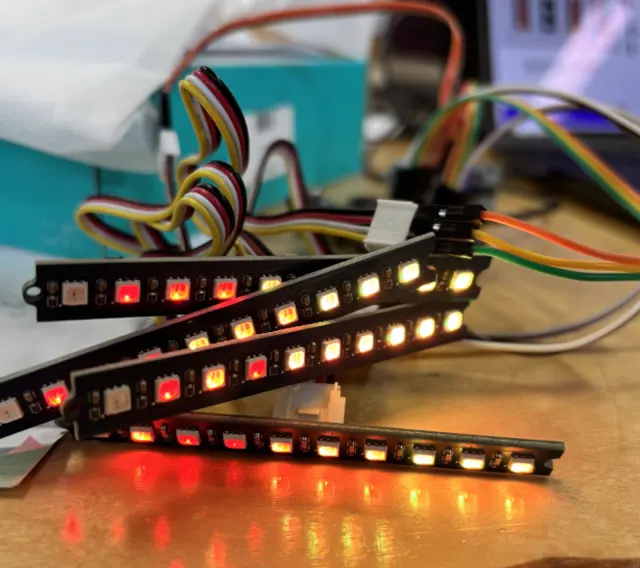
NOX needed restraint. It should never dominate the user's emotional state, only follow it.
Material & form
Form as emotional container.
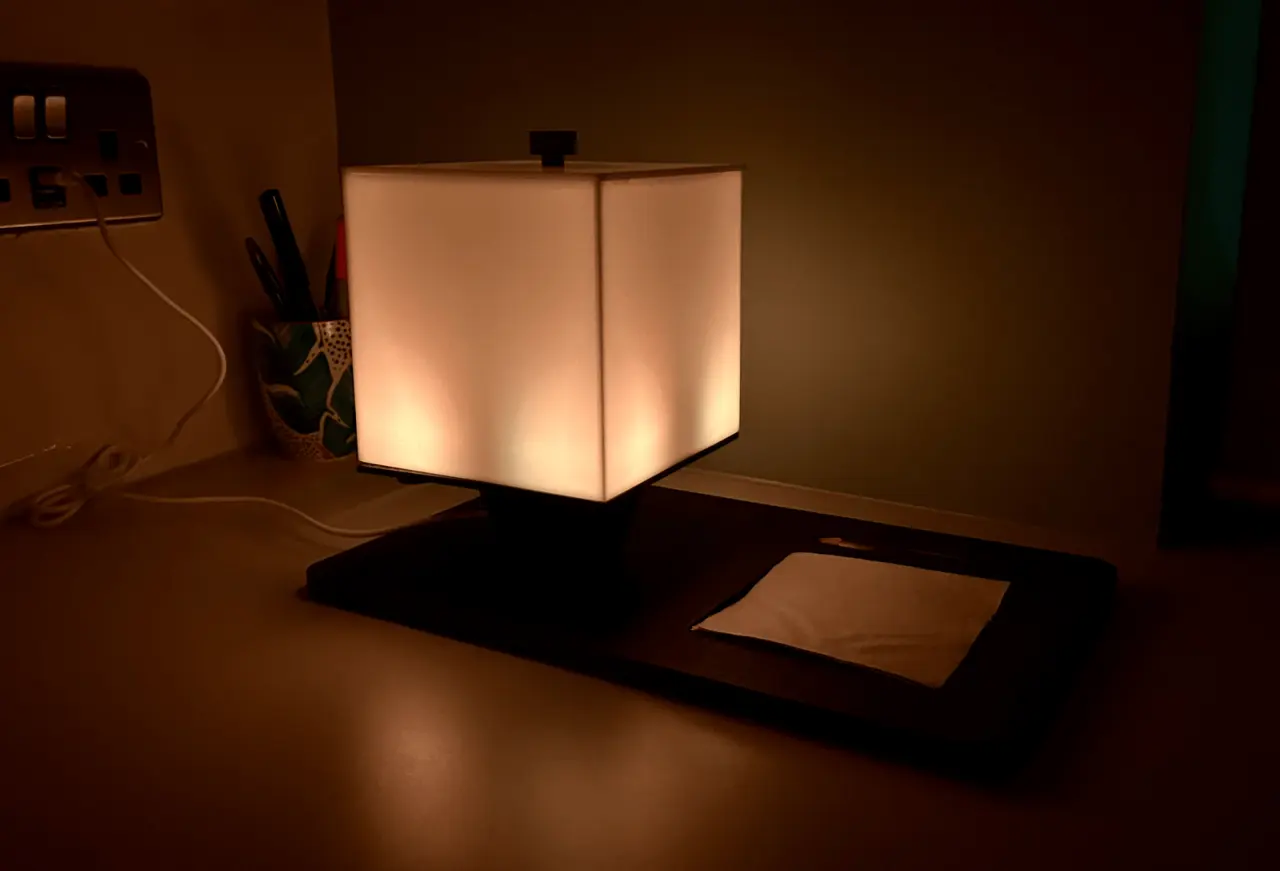
We tested different materials, but for the final prototype we used frosted opal acrylic, chosen for its internal glow: light that feels like it comes from within, not from LEDs.
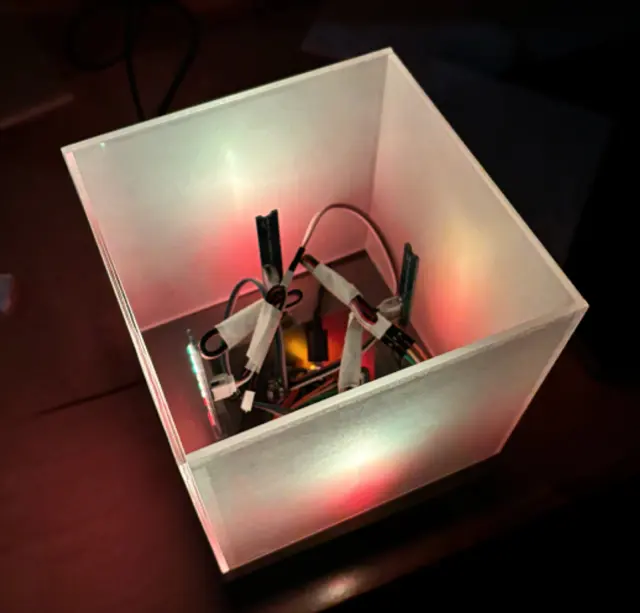
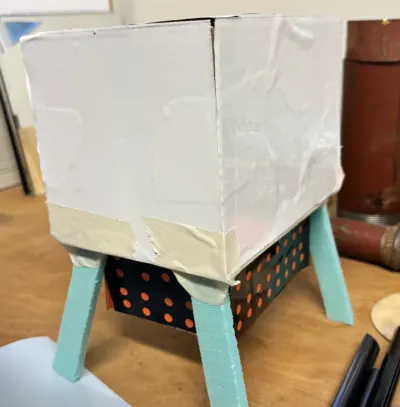
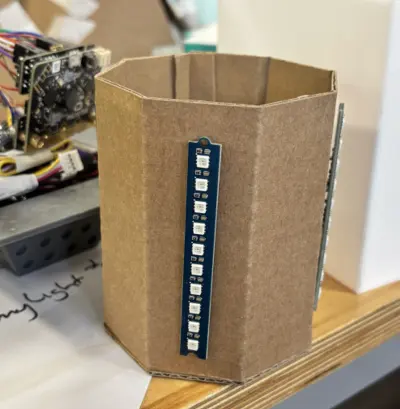
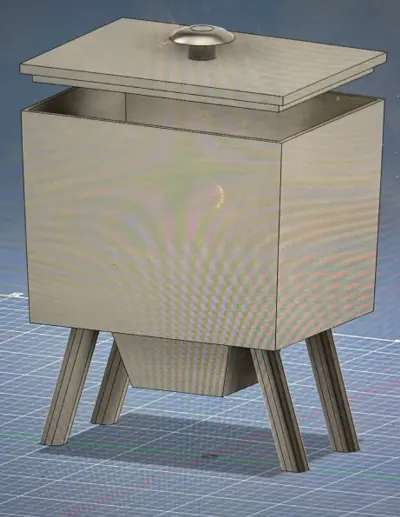
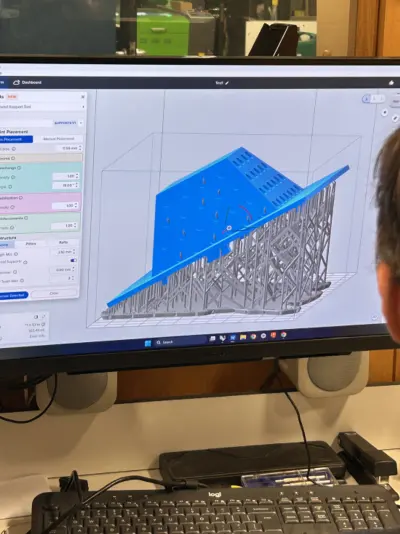
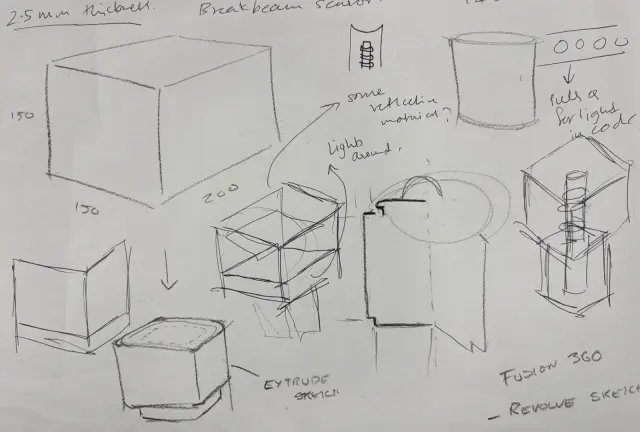
Paper, card, Fusion 360, print. Four rounds in four weeks.
No buttons. No interface. No instructions. A ritual artefact, not a product.
We learned Fusion 360 to design the form, then iterated between digital and physical to solve what neither could alone: light leaks, glow quality, and the gesture of throwing.
Technical integration
When imperfection became a feature.
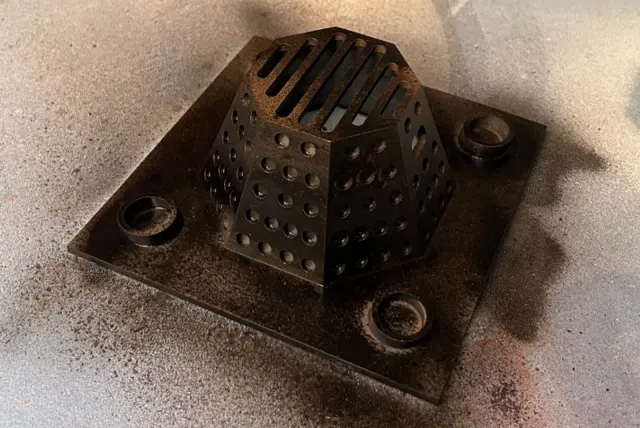
A sonar sensor detects the dropped paper. Detection is inherently imprecise, since paper crumples unpredictably. We calibrated for tolerance rather than precision, which mirrored the thing it was sensing: anxious thoughts are irregular too.
Ignition triggers a brief light and sound sequence. Too long felt theatrical, too short felt inconsequential; we iterated until it landed as decisive, not dramatic.
The system doesn't behave identically every time. Not a flaw, a feature: it reinforces NOX as a personal ritual, not a consumer product.
The ritual
The final artefact does not passively receive thoughts. It responds to them.
At the heart of NOX is a tightly choreographed ritual, every step intentional, minimal, and emotionally motivated.
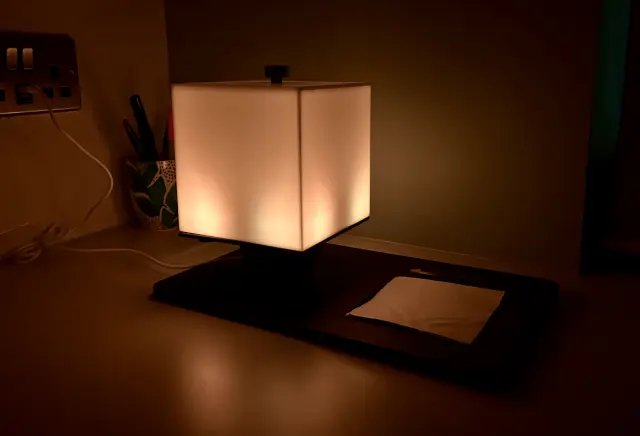
NOX exists in a soft, pulsing light, neither alert nor dormant.
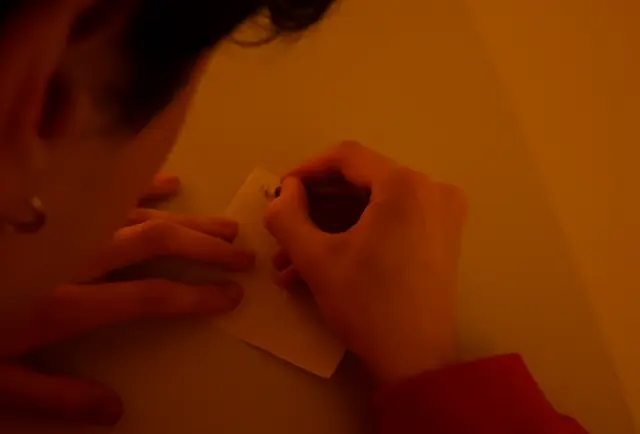
The thought leaves the head and lands on a slip of paper. Naming it is already half the gesture.
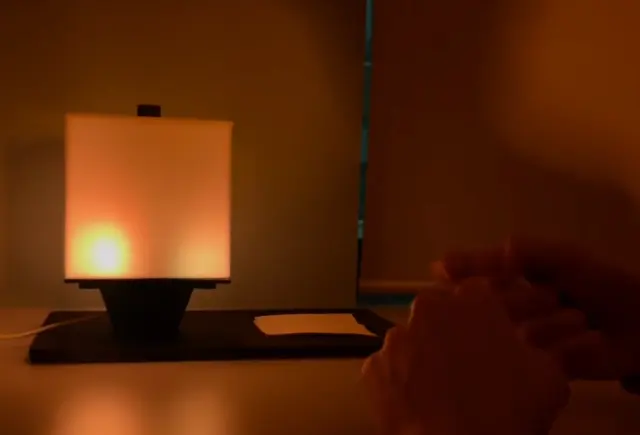
The paper is compressed into something small enough to let go of.
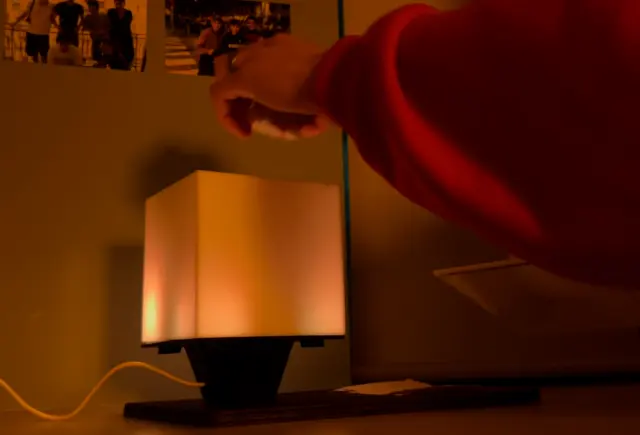
One decisive action. The sonar sensor picks it up on the way down.
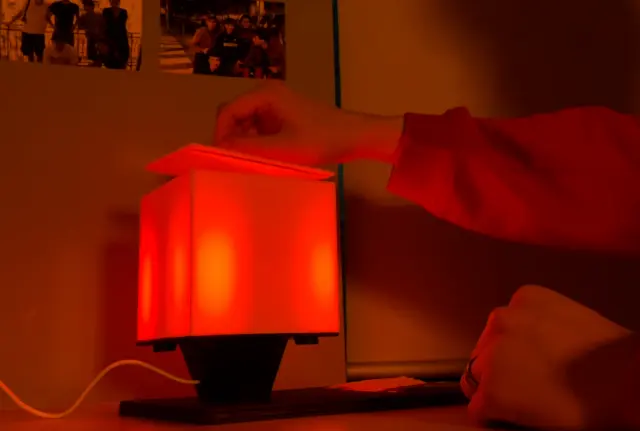
NOX ignites instantly. Light intensifies, sound crackles.
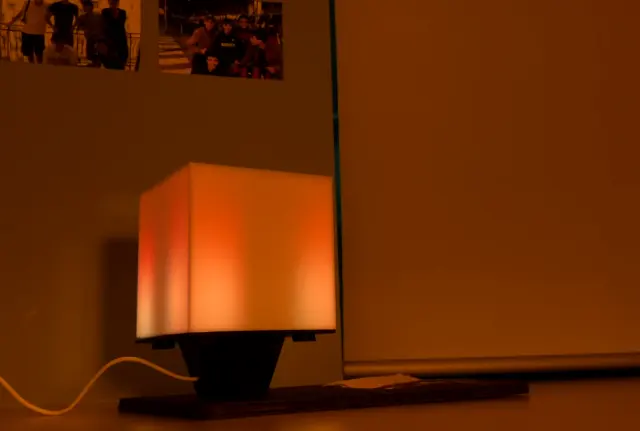
After ignition, NOX settles back into quiet. Nothing is kept, nothing is logged.
[ In the end ]
Each interaction stands alone. NOX is not about fire, paper, or technology. It is about creating a moment where internal noise is allowed to exit the body: briefly, physically, and without judgement.